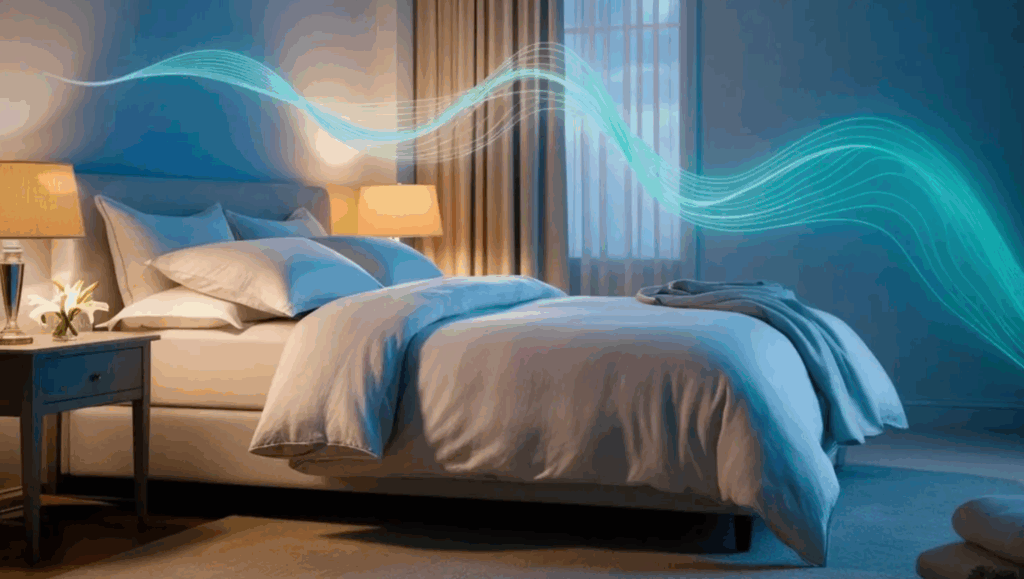
A non-pharmacologic, sound-based sleep intervention is producing measurable reductions in falls and the need for psychotropic medication in Deerfield’s skilled nursing memory care setting.
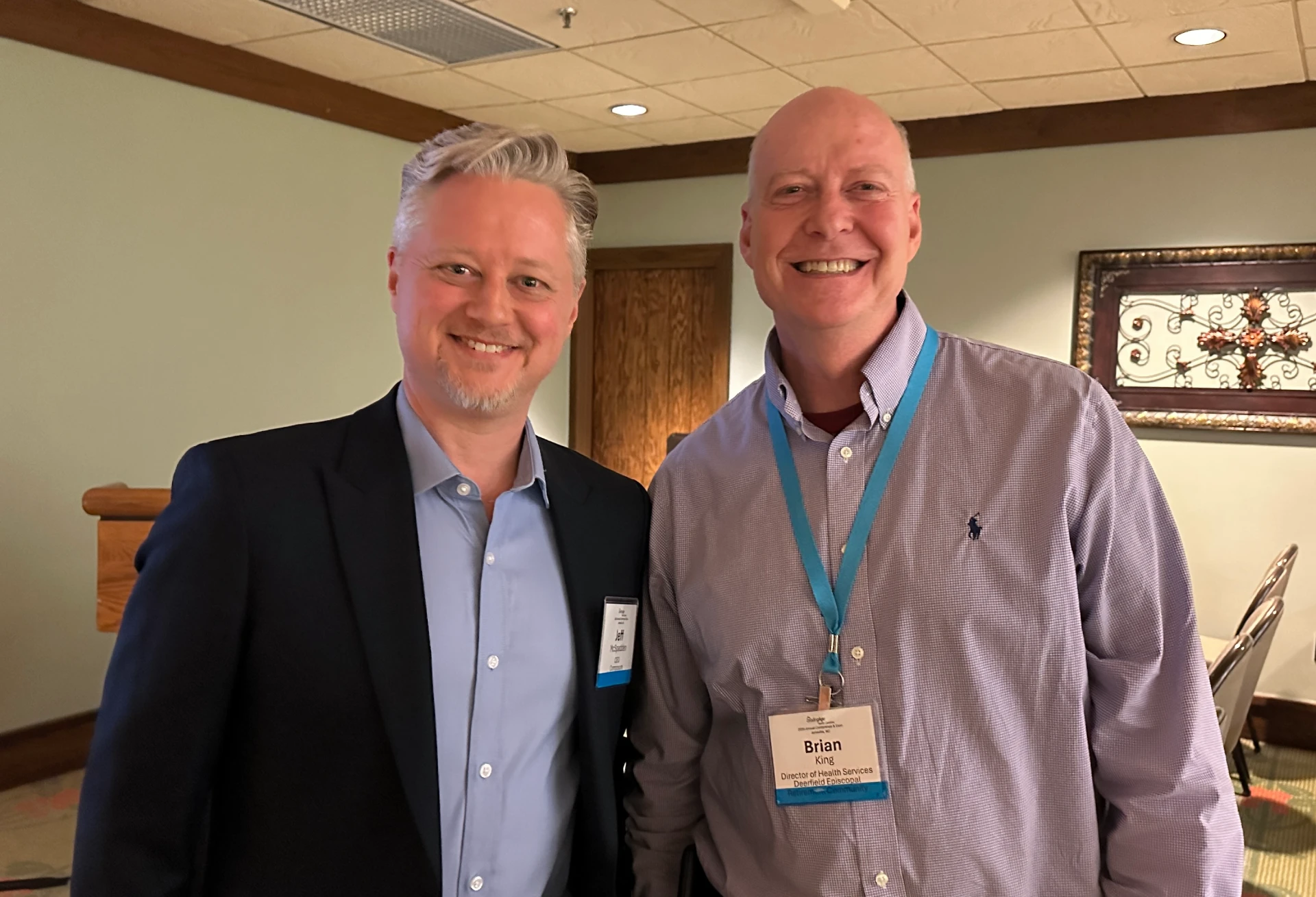
Brian King, NHA, OTL
Deerfield Director of Health Services
Jeff McSpadden
President & CEO
Composure
Sleep has always been a challenge in long-term care. For residents living with dementia, it can be one of the most persistent and yet least-addressed clinical concerns.
At Deerfield Episcopal Retirement Community in Asheville, North Carolina, leadership recognized that poor sleep was not solely a comfort issue for residents. Lack of sleep can contribute to fall rates, behavioral patterns, and the medication profiles of residents in a skilled nursing neighborhood. The question was whether addressing sleep at the environmental level could move the needle on outcomes that matter to residents, families, staff, and surveyors alike. So began a trial period to test a new technology solution.
Eighteen months later, the data suggests the answer is yes.
Why Sleep Matters in Dementia Care
In skilled nursing environments, nighttime settings can present a fundamental tension. Hallway sounds, overhead announcements, staff movement, and the rhythms of shift changes, can work against the very thing residents need most overnight: undisturbed rest.
For residents with moderate to severe dementia, this problem is compounded. Dementia physically changes how the brain regulates sleep. The thalamus, which acts as the brain’s sound filter during sleep, becomes less reliable as the disease progresses. Environmental noise that a healthy brain would screen out gets through more easily. Sleep becomes lighter, more fragmented, and more easily interrupted.
The relationship between sleep and dementia runs in both directions. Poor sleep accelerates cognitive decline and disease progression, while dementia itself disrupts the brain’s ability to achieve restorative sleep. It is a cycle that, left unaddressed, compounds over time.
“Sleep challenges aren’t unique to older adults—everyone deals with them at some point,” said Brian King, NHA, OTL, Director of Health Services at Deerfield. “What changes as people age, especially when they’re living with dementia, is the way the brain regulates and processes sleep. Those changes are a normal part of the condition, and they’re not something we can simply fix. Our goal isn’t to force a traditional sleep pattern, but rather to support each person’s natural rhythm and make sure their sleep is as comfortable and uninterrupted as possible.”
The clinical hypothesis was straightforward: if residents sleep better, they are more aware of their surroundings during the day, less reactive in the moment, and less likely to experience the cascade of events that leads to falls, behavioral incidents, and medication escalation.
A Non-Pharmacologic Approach to Better Sleep
In 2024, Deerfield’s leadership visited Garden Spot Village, a continuing care retirement community in Pennsylvania that had implemented a sound-based nighttime care approach called Sound Blanket, developed by Composure, Inc. The concept was simple but distinct from anything Deerfield had seen before.
Traditional sound masking technology is designed to prevent people outside a room from hearing what happens inside, common in offices and conference rooms to protect private conversations. Sound Blanket inverts that concept. It works inside the resident’s room, using precision, frequency-based sound to mask disruptive environmental noise and support more stable, undisturbed sleep throughout the night.
“What we’re really trying to do is reduce the kinds of noises people typically associate with an institutional care environment,” Brian explained. “Things like alarms, carts moving down the hallway, or other routine sounds can easily interrupt sleep. By minimizing those disruptions, we’re helping residents rest more naturally, whatever their individual sleep pattern may be. The more we can create an environment that feels calm, familiar, and less institutional, the better. In a setting that is, by nature, a healthcare facility, this is one way we can make it feel a bit more like home.”
The system is installed in resident rooms, runs automatically overnight, and requires no staff intervention to operate. After an initial onboarding period, it simply becomes part of the care environment.
Finding the Right Fit: Who Benefits Most
One of the early lessons from implementation was identifying the right resident profile for the intervention.
Cognitively intact residents sometimes prefer to maintain control over their sleep environment, choosing when to watch television listen to their own music. That autonomy is important and fully respected.
The strongest fit turned out to be residents with moderate to severe dementia who lack the ability to modify their own environment. For this population, Sound Blanket functions as a default environmental modification, active from admission after a baseline period, with opt-out always available for residents or families.
“This approach is really geared toward individuals living with moderate to severe dementia, particularly those who may no longer have the ability or independence to access tools or resources on their own,” Brian noted. “For that population, we have to think differently about how we support their well-being. Rather than relying on personal devices or individual actions, we’re making thoughtful changes to the environment itself to help create a more comfortable, supportive experience.”
Measuring Impact
Deerfield chose to measure the impact of the sleep intervention using existing MDS (Minimum Data Set) quality measures. The data was already being collected through routine assessments, so the question was whether the trend lines would change after implementation.
The study design compared six months of pre-implementation data (April-September 2024) against eighteen months of post-implementation data (October 2024-March 2026), across a consistent resident census of 37 to 52.
Falls declined 12.1%, from a historical average of 77.7% to a post-implementation mean of 68.3%. For a skilled nursing population with high acuity and a significant percentage of residents on hospice, this sustained reduction in falls is clinically meaningful.
Antipsychotic medication use declined 19.2%, from 26.1% to 21.1%. This reduction occurred on top of existing Gradual Dose Reduction protocols, which remained unchanged during the observation period.
Anti-anxiety and hypnotic medication use declined 33.6%, from 13.7% to 9.1%. This was the largest sustained improvement across all four tracked domains.
Behavioral incidents remained stable, with minor variation attributable to one or two residents experiencing advanced disease progression during the observation period.
Brian is careful not to overstate the results. “It’s very difficult to say with certainty that the technology directly caused these outcomes,” he explained. “What we can say is that we’ve seen some strong associations between the introduction of this technology and improvements in several key metrics. While correlation doesn’t necessarily prove causation, the trends we’ve observed are certainly encouraging and worth paying attention to.”
The behavioral data tells its own important story even without showing the same clear downward trend as the other metrics. Psychotropic medication use dropped substantially while behavioral incidents held steady. In practical terms, Deerfield was able to reduce medication use without seeing behaviors escalate. For any skilled nursing team working to balance quality of care, resident safety, and regulatory expectations around non-pharmacologic intervention, that finding carries weight.
Alignment with Evolving Regulatory Expectations
The results at Deerfield align naturally with the direction CMS (Centers for Medicare & Medicaid Services) has been moving for several years: a documented emphasis on non-pharmacologic interventions before psychotropic prescribing, individualized sleep hygiene planning, environmental modifications for dementia care, and measurable quality improvement across behavioral health domains.
With CMS now requires that a percentage of standard health surveys begin during non-business hours, the overnight care environment is becoming directly observable rather than self-reported. Approaches that demonstrably improve nighttime conditions position communities well for these evolving expectations.
When state surveyors visited Deerfield during the implementation period, Brian took the opportunity to share both the technology and the early results it was producing. “They were genuinely interested in the concept and how we were using it in our setting,” he said.
Beyond the novelty of the technology itself, the data demonstrated that Deerfield was taking a thoughtful, measurable approach to improving sleep quality through non-pharmacologic interventions. It provided clear evidence of an ongoing effort to address an important quality-of-life issue in a meaningful and resident-centered way.
What Comes Next: Objective Sleep Measurement
Deerfield and Composure are now entering the next phase of the partnership, which incorporates passive bed sensors capable of tracking sleep data objectively at the individual resident level.
The first 18 months in phase one relied on population-level MDS quality measures to gauge impact. The addition of sensor-based sleep tracking will provide a more granular, real-time view of how residents are actually sleeping, how often they are getting in and out of bed overnight, and how the nighttime environment is performing across the unit.
This data has the potential to inform care planning on a personalized level, giving clinical teams objective sleep information for residents who are unable to self-report their experience.
“At the heart of this project is the desire to help people who can no longer make those adjustments for themselves,” Brian said. “Not every challenge comes back to sleep, but we know that sleep issues are incredibly common across the adult population and can have a significant impact on overall health and well-being. The question we asked ourselves was: How can we step in and provide support for residents who aren’t able to recognize or address those issues on their own? This project is our effort to do exactly that—identify a potential root cause and create an environment that better supports their quality of life.”
Deerfield Episcopal Retirement Community is a nonprofit continuing care retirement community in Asheville, North Carolina, providing independent living, assisted living, memory support, and skilled nursing services. To learn more about Deerfield’s approach to quality care and innovation, visit the Life Care page.
Sound Blanket is a product of Composure, Inc. For more information about the sleep intervention referenced in this article, visit composure.care or contact Jeff McSpadden at jeff@composure.care.